 Skip to content
| Market Segment | 2024 Value | 2030-2035 Target | CAGR | What This Means |
|---|---|---|---|---|
| Industrial Inkjet Printers | $6.5 Billion | Growing to 2034 | 6. 0% | More printers need more ink production lines |
| Digital Fabrication Inkjet Inks | $3.91 Billion | $7.68 Billion by 2035 | 6.33% | Direct growth in manufacturing capacity demand |
| Drop-on-Demand Inkjet | $4.5 Billion | $7.1 Billion by 2030 | 7.8% | Requires high-precision nano-grinding equipment |
| All Inkjet Printers (Global) | $42.7 Billion | $60.35 Billion by 2030 | 6.0% | Massive expansion in ink consumption |
| U.S. Printing Inks | $4.88 Billion | Higher by 2034 | 2.3% | Shift to water-based formulations driving new lines |
The inkjet printing industry is experiencing explosive growth, and consequently, businesses worldwide are investing in inkjet ink manufacturing equipment. Whether you’re planning to produce water-based inks, UV-curable formulations, or high-performance ceramic inks, understanding the right equipment is crucial. In this guide, we’ll walk you through everything you need to know about inkjet ink production lines, from basic machines to advanced automation systems.
1. What Is Inkjet Ink Manufacturing Equipment?
First and foremost, let’s clarify what we mean by inkjet ink manufacturing equipment. Simply put, this term covers all the machines and systems used to convert raw materials—such as pigments, resins, solvents, and additives—into finished, ready-to-use inkjet inks. However, it’s not just one machine doing all the work.
The Complete Equipment Ecosystem
Modern inkjet ink manufacturing equipment typically includes several key components working together. For instance, you’ll find premixers that blend raw materials, bead mills that grind pigments to microscopic sizes, filters that remove unwanted particles, and de-aerators that eliminate air bubbles. Additionally, automated filling systems package the final product into containers.
Moreover, depending on the type of ink you’re producing, your equipment configuration will vary significantly. Water-based inks, for example, require different handling than solvent-based or UV-curable formulations. Similarly, textile inks need different processing than ceramic inks used in tile decoration.
Why “Equipment” Isn’t Just One Machine
Many newcomers to ink manufacturing mistakenly think they can buy a single machine to make inkjet ink. In reality, a complete production line often includes five to eight different pieces of equipment. Furthermore, these machines must work together seamlessly to ensure consistent quality.
“Modern digital inks require precision at the nanometer level. Therefore, investing in a complete production line rather than individual machines ensures your inks meet the strict requirements of today’s drop-on-demand printheads.” — Dr. Sarah Chen, Senior Process Engineer, Digital Ink Technologies
As a result, when businesses ask about inkjet ink manufacturing equipment, they’re really asking about an entire production ecosystem. This ecosystem transforms basic chemicals into sophisticated fluids capable of creating everything from packaging graphics to textile patterns.
Different Inks, Different Equipment Needs
Importantly, the specific equipment you need depends heavily on your target ink formulations. Solvent-based inks, for instance, require explosion-proof motors and ATEX-certified designs for safety. Meanwhile, water-based formulations need stainless steel construction to prevent corrosion. UV-curable inks, on the other hand, often require specialized mixing to handle light-sensitive ingredients.
Therefore, before selecting your inkjet ink manufacturing equipment, you must clearly define which ink types you plan to produce. This decision will significantly impact your equipment specifications, safety requirements, and overall investment.
2. Key Machines in an Inkjet Ink Production Line
Now that you understand what inkjet ink manufacturing equipment encompasses, let’s break down the individual machines you’ll need. Each piece plays a critical role in transforming raw materials into high-performance inks.
Premixers and High-Speed Dispersers
At the beginning of every production line, you’ll find premixers or high-speed dispersers. These machines handle the initial blending of pigments, resins, solvents, and additives. Specifically, they create what’s called a “premix” or “millbase” that goes to the next stage.
High-speed dispersers use rotating blades to break apart pigment clumps and wet out the particles with liquid. Additionally, many modern units operate under vacuum to prevent air entrapment. This step is absolutely essential because poorly dispersed premixes lead to inefficient grinding later on.
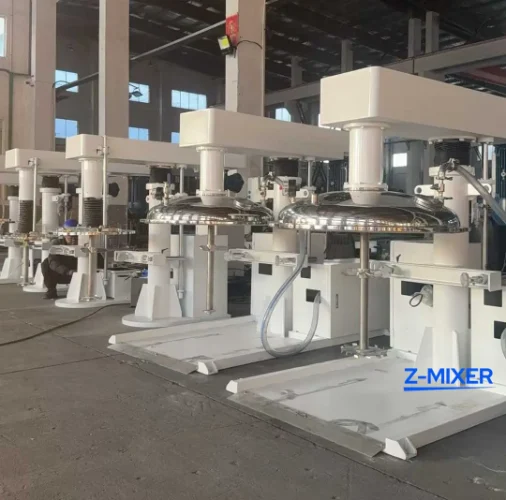
High-speed disperser creating initial pigment dispersion
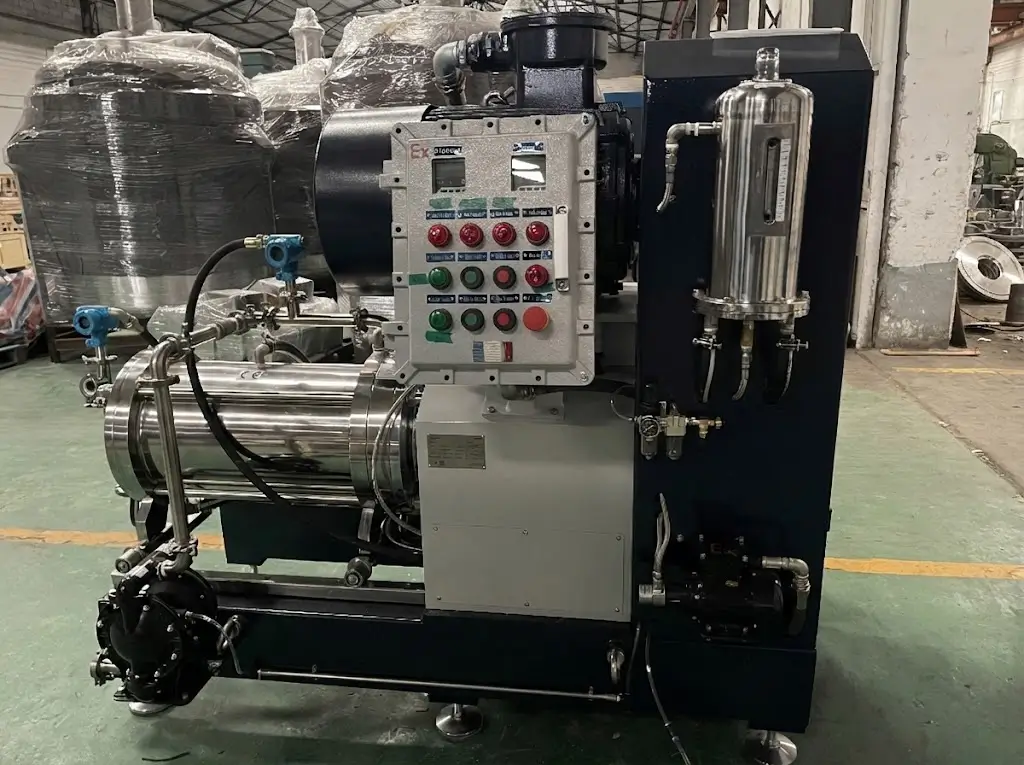
Horizontal bead mill for nano-scale grinding
Bead Mills: The Heart of Particle Size Reduction
Next comes the most critical piece of inkjet ink manufacturing equipment: the bead mill. Unlike older ball mills, modern horizontal bead mills deliver exceptional grinding efficiency and particle size control. In fact, they can reduce pigment particles down to 50-500 nanometers—small enough for even the most demanding inkjet printheads.

Bead mills work by pumping your premix through a chamber filled with tiny grinding beads (usually ceramic or glass). As the beads collide with pigment particles at high speed, they break them into smaller and smaller pieces. Furthermore, advanced cooling systems keep temperatures stable, which protects sensitive ingredients.
There are several types of bead mills available, including horizontal, vertical, basket, and turbo models. However, for inkjet ink manufacturing equipment, horizontal bead mills are by far the most popular choice due to their high efficiency and continuous processing capability.
Filtration and De-Aeration Systems
After milling, your ink still isn’t quite ready. Even with excellent grinding, some oversized particles may remain, and dissolved air creates bubbles. Consequently, filtration equipment removes particles above your specified size limit (often 1-5 microns for inkjet inks).

Similarly, de-aeration systems pull out dissolved gases using vacuum technology. This step is crucial because air bubbles in ink cause printhead failures and inconsistent printing. Therefore, professional inkjet ink manufacturing equipment always includes both filtration and de-aeration stages.
Filling and Packaging Machines
Finally, automated filling machines transfer your finished ink into bottles, drums, or intermediate bulk containers (IBCs). Modern filling equipment offers precise volumetric or gravimetric dosing, plus features like nitrogen blanketing for sensitive formulations. Additionally, many systems integrate labeling and capping for complete packaging automation.

Altogether, these machines form a complete inkjet ink manufacturing equipment line. Each component builds on the previous step, ultimately delivering consistent, high-quality inks batch after batch.
Not sure which machine configuration fits your formula?
Building a nano-scale production line requires precision-matched components. Don’t risk printhead clogs with mismatched equipment. Let our engineers design a turnkey solution tailored to your specific ink chemistry.
3. Complete Process Flow: From Raw Materials to Finished Ink
Understanding the individual machines is important; however, seeing how they work together in sequence is even more valuable. Therefore, let’s walk through the complete production process step by step.
Step 1: Raw Material Preparation and Charging
The process begins with gathering all your raw materials. Typically, this includes organic or inorganic pigments, polymer resins, solvents or water, dispersing agents, defoamers, biocides, and various performance additives. Importantly, precise weighing and measuring at this stage ensures batch-to-batch consistency.
Many modern inkjet ink manufacturing equipment lines feature automatic charging systems. These systems weigh and transfer materials directly into the premix tank, which reduces manual handling errors. Furthermore, automation minimizes contamination risks and speeds up production.
Step 2: Premixing and Initial Dispersion
Once raw materials enter the premix tank, high-speed dispersers go to work. The disperser blade rotates at speeds often exceeding 1,000 RPM, creating intense shear forces. As a result, pigment agglomerates break apart and become wetted by the liquid phase.

This step usually takes 30 minutes to 2 hours, depending on pigment type and loading. Additionally, operators often run this stage under vacuum to prevent air incorporation. The end result is a relatively uniform “millbase” ready for fine grinding.
Step 3: Fine Milling to Target Particle Size
Next, the millbase transfers to a bead mill for fine grinding. This is where the magic happens in inkjet ink manufacturing equipment. The bead mill circulation pump sends the millbase through the grinding chamber multiple times (or continuously in recirculation mode) until particles reach the target size.
For example, if you’re producing pigment-based inkjet inks for drop-on-demand printheads, you might target a D50 particle size of 80-120 nanometers. Moreover, you’ll want a narrow particle size distribution to ensure consistent jetting performance. Modern bead mills achieve this level of precision reliably.
“The bead mill is where quality is won or lost in inkjet ink production. Proper media selection, rotor speed, and cooling can mean the difference between a stable ink and one that clogs printheads after a few hours.” — James Rodriguez, Technical Director, Global Ink Solutions
Step 4: Quality Control and Testing
After milling, most manufacturers pull samples for quality testing. Common tests include particle size analysis (using laser diffraction or dynamic light scattering), viscosity measurement, pH testing, and color matching. Consequently, this data confirms whether the ink meets specifications before proceeding.
If adjustments are needed, operators can return the batch for additional milling or add corrective additives. Therefore, inline quality control saves time and raw materials by catching issues early.
Step 5: Filtration and De-Aeration
Once testing confirms proper particle size, the ink passes through filtration. Typically, inkjet ink manufacturing equipment uses bag filters or cartridge filters rated at 1-5 microns. This step removes any oversized particles that could clog printheads.

Simultaneously or immediately after, de-aeration equipment removes dissolved gases. Many systems use vacuum chambers where the ink spreads into a thin film, allowing bubbles to escape. As a result, your finished ink has minimal air content, ensuring reliable jetting performance.
Step 6: Final Filling and Packaging
Finally, the finished ink transfers to automated filling equipment. Depending on your market, you might fill 100ml bottles for desktop printers, 1-liter containers for commercial systems, or 200-liter drums for industrial customers. Modern filling machines offer incredible accuracy—often within ±0.5% of the target volume.

Additionally, many inkjet ink manufacturing equipment lines integrate nitrogen blanketing during filling. This step prevents oxidation in UV or solvent inks, thereby extending shelf life. After filling, containers move to labeling, capping, and boxing stations for final packaging.
Automation: Tying It All Together
Increasingly, manufacturers are linking all these steps through automated control systems. For instance, a central PLC (programmable logic controller) can manage material charging, mixing times, milling parameters, filtration, and filling—all from one interface. Consequently, automation reduces labor costs, improves consistency, and provides complete batch traceability.
Moreover, advanced systems offer recipe storage, so switching between different ink formulations becomes quick and error-free. Therefore, when evaluating inkjet ink manufacturing equipment, always ask about automation capabilities and integration options.
4. Why Particle Size & Technical Specs Matter for Inkjet Inks
You might wonder why so much emphasis is placed on particle size in inkjet ink manufacturing equipment. After all, isn’t ink just colored liquid? Actually, the technical specifications of your ink—especially particle size—directly determine whether your product works or fails in real-world applications.
The Physics of Inkjet Printing
Modern inkjet printheads work by forcing tiny droplets of ink through microscopic nozzles. These nozzles typically measure 20-50 microns in diameter (about half the width of a human hair). Furthermore, drop-on-demand systems use piezoelectric or thermal mechanisms to eject droplets on command with incredible precision.
However, here’s the challenge: if your ink contains particles larger than about 1-2 microns, they can clog these tiny nozzles. Therefore, inkjet inks must have extremely fine, uniform particle sizes. This requirement is why professional inkjet ink manufacturing equipment focuses so heavily on milling and filtration.
Target Particle Size Ranges by Ink Type
Different ink types require different particle specifications. For example, dye-based inks contain no particles at all—the colorant dissolves completely. In contrast, pigment-based inks typically target particle sizes between 80-150 nanometers for optimal performance.
Meanwhile, specialty inks have even tighter requirements. UV-curable inkjet inks often need particles below 100 nanometers to prevent settling and ensure smooth curing. Similarly, textile inks for digital fabric printing usually specify particles under 200 nanometers to achieve good wash fastness and color brightness.
| Equipment / Process Parameter | Typical Result / Metric |
|---|---|
| Horizontal Bead Mill | High-fineness grinding; most popular for inkjet ink production |
| Particle Size Range (Bead Mill Output) | 50–500 nm typical; 1–5 µm distribution acceptable |
| Chilled Water Cooling (59°F vs 72°F) | ~30% higher grinding efficiency with proper cooling |
| Automatic Charging & Metering | Reduces labor by 40-60%; improves batch consistency |
| Bead Mill vs Ball Mill Efficiency | Bead mills offer 3-5x better energy efficiency and finer output |
Beyond Particle Size: Viscosity and Rheology
Particle size isn’t the only critical specification, however. Viscosity—the thickness or flow resistance of your ink—matters enormously. Most inkjet systems require viscosities between 2-20 centipoise (cP) at the operating temperature. If your ink is too thick, it won’t eject properly; too thin, and droplets become irregular.
Therefore, professional inkjet ink manufacturing equipment often includes viscosity control systems. These systems monitor ink temperature and add solvents or thinners automatically to maintain target viscosity. Furthermore, advanced formulations use shear-thinning additives that help ink flow through nozzles easily while maintaining good substrate adhesion.
Temperature Control and Its Impact
Temperature plays a huge role in ink performance and manufacturing efficiency. During milling, friction generates heat that can damage sensitive ingredients or change viscosity. Consequently, quality bead mills incorporate sophisticated cooling systems.
Research shows that using chilled water at approximately 59°F (15°C) instead of room-temperature water at 72°F (22°C) can increase grinding efficiency by roughly 30%. Moreover, better temperature control delivers more consistent particle sizes and protects heat-sensitive resins and additives.
Contamination Control: The Hidden Specification
Another critical but often overlooked specification is contamination control. Even microscopic metal particles from worn equipment or dust from the production environment can cause printhead failures. Therefore, professional inkjet ink manufacturing equipment uses stainless steel construction, closed transfer systems, and cleanroom-compatible designs.
Additionally, Clean-In-Place (CIP) systems allow thorough equipment cleaning between batches without disassembly. This capability is especially important when producing multiple ink colors or formulations on the same line.
“We’ve seen customers struggle with printhead reliability until they upgraded to properly designed manufacturing equipment. Contamination control and particle size distribution aren’t optional—they’re fundamental requirements for commercial inkjet ink production.” — Dr. Michael Zhang, R&D Manager, Advanced Materials Corporation
In summary, technical specifications like particle size, viscosity, temperature stability, and contamination control directly impact your ink’s performance. Therefore, when selecting inkjet ink manufacturing equipment, these parameters should drive your decision-making process just as much as price or capacity.
5. Inkjet Ink Types: Water-Based, Solvent, UV, Pigment & Ceramic
Not all inks are created equal, and consequently, not all inkjet ink manufacturing equipment is the same. Understanding the different types of inkjet inks helps you select the right machines and configurations for your specific production needs. Let’s explore the major categories and what they mean for your equipment choices.
Water-Based Inkjet Inks
Water-based inks are the most environmentally friendly option and increasingly popular in packaging and textile printing. As the name suggests, these inks use water as the primary solvent carrier. Moreover, they produce minimal VOC (volatile organic compound) emissions, making them safer for workers and easier to handle from a regulatory standpoint.
However, water-based formulations present unique challenges for inkjet ink manufacturing equipment. For instance, water promotes corrosion in carbon steel, so all wetted parts must use stainless steel construction. Additionally, water-based inks often require longer drying times on substrates, which affects formulation with specific resins and additives.
Furthermore, bacterial growth can occur in water-based systems. Therefore, manufacturers typically add biocides during the premixing stage. Your high-speed dispersers and tanks should support easy cleaning and sanitization to prevent contamination between batches.
Solvent-Based Inkjet Inks
Solvent-based inks use organic solvents like ketones, alcohols, or glycol ethers as carriers. These inks offer excellent adhesion to non-porous substrates such as vinyl, plastics, and metals. Consequently, they’re widely used in outdoor signage, vehicle graphics, and industrial coding applications.
The key consideration for solvent ink production is safety. Because organic solvents are flammable and potentially explosive, your inkjet ink manufacturing equipment must meet ATEX or IECEx certification standards. This means explosion-proof motors, grounding systems, and proper ventilation throughout the production area.
Additionally, solvent inks require robust temperature control. Many solvents evaporate quickly, which can change ink composition during processing. Therefore, quality bead mills for solvent inks include closed-loop cooling systems and solvent recovery capabilities to minimize waste and maintain consistency.
UV-Curable Inkjet Inks
UV-curable inks represent cutting-edge technology in the printing industry. Instead of drying through evaporation, these inks cure instantly when exposed to ultraviolet light. As a result, they enable printing on heat-sensitive materials and offer immediate handling of printed products.
UV inks contain special monomers, oligomers, and photoinitiators that react when hit with UV light. However, these ingredients are light-sensitive and can begin curing prematurely if exposed. Therefore, inkjet ink manufacturing equipment for UV inks often includes amber or UV-blocking lighting in production areas and opaque storage tanks.
Moreover, UV formulations tend to be more viscous than other ink types. Consequently, your premixing equipment needs higher torque motors and specialized blade designs. Similarly, some UV inks require heated processing to reduce viscosity during milling, adding another layer of complexity to equipment selection.
Pigment vs. Dye-Based Inks: Equipment Implications
Beyond solvent type, inks divide into pigment-based and dye-based categories. Dye-based inks contain colorants that dissolve completely in the liquid carrier. Because there are no particles to grind, dye ink production is simpler and doesn’t always require bead milling. However, dye inks generally offer lower light-fastness and water resistance.
In contrast, pigment-based inks suspend tiny colored particles in the carrier liquid. These inks deliver superior durability, UV resistance, and color gamut. Nevertheless, pigment inks absolutely require sophisticated inkjet ink manufacturing equipment including bead mills to achieve the necessary particle size reduction.
Ceramic and Specialty Industrial Inks
Finally, specialty applications like ceramic tile decoration use unique ink formulations containing glass frits, ceramic pigments, and high-temperature binders. These inks must withstand firing at temperatures exceeding 1,000°C (1,832°F) while maintaining color stability.
Ceramic ink production demands heavy-duty inkjet ink manufacturing equipment because the pigments are exceptionally hard. Furthermore, many ceramic formulations use exotic solvents or contain abrasive particles that accelerate equipment wear. Therefore, manufacturers often specify tungsten carbide grinding media and wear-resistant chamber linings.
| Ink Type | Main Carrier | Key Equipment Requirements | Typical Applications |
|---|---|---|---|
| Water-Based | Water + glycols | Stainless steel construction; biocide dosing; easy cleaning | Packaging, textiles, paper printing |
| Solvent-Based | Ketones, alcohols, esters | ATEX/IECEx certification; explosion-proof; solvent recovery | Outdoor signage, vinyl, industrial coding |
| UV-Curable | Acrylate monomers | UV-blocking storage; high-torque mixers; heating capability | Labels, rigid substrates, 3D printing |
| Pigment-Based | Various (water/solvent/UV) | Bead mills essential; tight filtration; particle size monitoring | High-durability applications; outdoor use |
| Dye-Based | Water or alcohol | Simple mixing; fine filtration; no milling needed | Photo printing, desktop office printers |
| Ceramic | Organic solvents + binders | Wear-resistant chambers; tungsten carbide media; heavy-duty | Tile decoration, glass decoration |
“Choosing the wrong equipment for your ink type is the most common mistake we see. A standard mixer designed for water-based inks will fail quickly—and dangerously—if you try to process solvent formulations without proper ATEX certification.” — Jennifer Martinez, Safety Compliance Officer, InkTech Manufacturing
In conclusion, the type of ink you plan to produce should be your first consideration when selecting inkjet ink manufacturing equipment. Each ink category brings unique requirements for materials of construction, safety features, and processing capabilities. Therefore, clearly defining your product portfolio before equipment shopping will save you time, money, and potential safety issues down the road.
Need ATEX-Certified Equipment for Solvent or UV Inks?
Safety and compliance are non-negotiable in industrial ink manufacturing. We specialize in explosion-proof designs and wear-resistant chambers for aggressive formulations. Get a technical consultation and a safe, certified equipment quote today.
6. Market Growth: Why Inkjet Ink Manufacturing Equipment Demand Is Soaring
Perhaps you’re wondering whether now is the right time to invest in inkjet ink manufacturing equipment. The answer, based on market data, is a resounding yes. Multiple market segments are experiencing strong growth, creating unprecedented demand for ink production capacity worldwide.
The Digital Printing Revolution
Traditional printing methods like offset lithography and screen printing are steadily losing market share to digital inkjet technologies. Why? Because digital printing offers advantages that analog methods simply cannot match. For instance, digital systems enable variable data printing, meaning every printed piece can be unique—perfect for personalized marketing and short-run packaging.
Moreover, digital inkjet printing eliminates the need for printing plates, reducing setup time and waste. Consequently, brands can test new packaging designs or launch limited editions without massive upfront investments. This flexibility is driving rapid adoption across packaging, labels, and commercial printing sectors.
As more businesses switch to digital inkjet systems, they naturally need more ink. Furthermore, these sophisticated printers require high-performance inks that can only be produced with professional inkjet ink manufacturing equipment. Therefore, the shift to digital printing directly translates into growing demand for production lines.
Market Size and Projections: The Numbers Tell the Story
Let’s look at concrete data. The global inkjet printers market was valued at approximately $42. 7 billion in 2024. However, analysts project it will reach about $60. 35 billion by 2030, representing a compound annual growth rate (CAGR) of 6.0%. That’s nearly $18 billion in new market value in just six years.
Similarly, the industrial inkjet printers segment alone stood at roughly $6.5 billion in 2024 and is growing at around 6% annually through 2034. Industrial printers consume far more ink than desktop models, so this growth has an outsized impact on ink production demand.
Even more impressive is the digital fabrication inkjet inks market. This segment was valued at about $3.91 billion in 2024 but is forecast to reach approximately $7.68 billion by 2035—nearly doubling in value. With a CAGR of 6.33%, this represents one of the fastest-growing niches in the broader printing industry.
Drop-on-Demand Technology: Precision Driving Growth
A particularly exciting segment is drop-on-demand (DOD) inkjet technology. Unlike continuous inkjet systems that spray constantly, DOD systems eject droplets only when and where needed. This precision enables applications far beyond traditional printing, including 3D printing, electronics manufacturing, and biomedical device production.
The global drop-on-demand inkjet market was estimated at around $4.5 billion in 2024 and is expected to grow to roughly $7.1 billion by 2030. That’s a CAGR of approximately 7.8%—the highest among all inkjet segments.
Importantly, DOD technology demands extremely fine particle sizes and precise viscosity control. Therefore, this growth directly drives demand for advanced inkjet ink manufacturing equipment featuring nano-grinding capabilities and sophisticated quality control systems.
Regional Growth Hotspots
While inkjet adoption is growing globally, certain regions are leading the charge. The United States printing inks market alone was valued near $4.88 billion in 2024, with steady growth of roughly 2.3% annually through 2034. Meanwhile, Asia-Pacific regions—particularly China and India—are experiencing even faster growth due to expanding manufacturing sectors and rising consumer markets.
Additionally, European markets are shifting rapidly toward water-based and low-VOC inks due to environmental regulations. This regulatory push is forcing ink manufacturers to upgrade or replace outdated equipment, creating a replacement market alongside new capacity installations. Consequently, equipment suppliers are seeing strong demand across multiple geographic markets simultaneously.
Application Diversification: Beyond Paper and Packaging
Another major growth driver is the expansion of inkjet technology into non-traditional applications. Textile printing is one prominent example. Digital textile printing allows fashion brands to create custom designs with minimal waste, and the global digital textile printing market is growing rapidly.
Similarly, ceramic tile manufacturers are adopting inkjet decoration to replace older roller and screen printing methods. Inkjet enables photorealistic images and endless design variations on tiles, and ceramic ink production requires specialized inkjet ink manufacturing equipment capable of handling abrasive pigments.
Furthermore, emerging applications in electronics (printed circuits), pharmaceuticals (tablet printing), and even food decoration are opening entirely new markets for inkjet inks. Each application brings unique formulation requirements and, consequently, demand for versatile production equipment.
📊 Market Growth Summary: Key Takeaways
- Overall inkjet printer market: Growing from $42.7B (2024) to $60.35B (2030)
- Digital fabrication inks: Expected to nearly double from $3.91B to $7.68B by 2035
- Drop-on-demand segment: Fastest growth at 7.8% CAGR through 2030
- Industrial inkjet printers: Steady 6% annual growth through 2034
- Application expansion: Textiles, ceramics, electronics, and specialty markets driving diversification
“We’re seeing unprecedented interest in production line installations from both established ink manufacturers expanding capacity and completely new entrants attracted by market growth. The ROI calculations for inkjet ink manufacturing equipment have never looked better.” — David Thompson, Market Analyst, Printing Industry Association
In summary, multiple converging trends—digital printing adoption, drop-on-demand technology expansion, application diversification, and regional market development—are creating robust, sustained demand for inkjet ink manufacturing equipment. For businesses considering entry into ink production or capacity expansion, the market fundamentals strongly support investment.
7. How to Choose the Right Inkjet Ink Manufacturing Equipment (Buyer’s Guide)
Selecting the right inkjet ink manufacturing equipment can feel overwhelming, especially with the variety of options available. However, by following a systematic approach and asking the right questions, you can identify the ideal equipment configuration for your specific needs. Let’s break down the key selection criteria.
Start With Production Volume and Batch Size
Industrial inkjet ink manufacturers produce in a wide range of batch sizes, typically starting from as low as 25 litres for specialized or small-batch industrial orders, and ranging up to 500 to 1,000 litres or more for larger, standard production runs.
Here are the details on inkjet ink production capacities:
Small Batch Production: Specialty, industrial-grade inkjet inks (e.g., for piezo or thermal printheads) can be produced in batches starting from a minimum of 25 litres.
Large-Scale Production: Standard, high-volume manufacturing lines often produce batches in the range of 500 litres to 1,000 litres.
Industrial Plant Capacity: Some industrial ink production lines are designed to produce between 1,000 and 10,000 tonnes per year.
Batch Components: The production involves mixing, dispersing, milling, and filtering to produce consistent quality, particularly for industrial, textile, or digital inks.
Define Your Ink Types and Formulation Requirements
As we discussed in section 5, different ink types demand different equipment specifications. Therefore, create a detailed list of every ink formulation you plan to produce. Include water-based, solvent-based, UV-curable, or specialty variants in your planning.
This inventory drives critical decisions about materials of construction. If you’re only making water-based inks, standard 316 stainless steel throughout is appropriate. However, if your portfolio includes aggressive solvents, you may need higher-grade alloys or specialized coatings on wetted surfaces.
Moreover, if you plan to produce both low-viscosity and high-viscosity inks, your high-speed dispersers need variable-speed drives and appropriate blade designs to handle the range. Similarly, some pigments require more aggressive grinding than others, affecting your bead mill specifications.
Particle Size Targets and Quality Requirements
Next, consider your target particle size specifications. Desktop inkjet inks typically require D50 particle sizes around 80-150 nanometers with tight distributions. Industrial coding inks might accept slightly larger particles up to 200-300 nanometers. Meanwhile, ceramic inks might have different requirements entirely.
Your particle size targets directly impact which type of bead mill you need. Standard horizontal bead mills handle most commercial inkjet applications excellently. However, if you’re targeting ultra-fine particles below 50 nanometers for specialty applications, you may need nano-bead mill technology with smaller grinding media and higher energy density.
Furthermore, consider how you’ll measure and control particle size. Professional inkjet ink manufacturing equipment increasingly includes inline particle size analyzers that provide real-time feedback, allowing operators to stop milling exactly when target specifications are reached. This capability prevents over-processing and ensures consistency.
Automation Level: Manual, Semi-Automatic, or Fully Automatic
Automation represents a major cost variable but offers significant long-term benefits. Manual systems require operators to weigh materials, transfer batches between equipment, and monitor processes continuously. While initial costs are lower, labor expenses add up quickly, and manual operations introduce more variability.
Semi-automatic systems automate specific steps—perhaps automated material charging and recipe-controlled mixing—while leaving other operations manual. This approach balances cost and efficiency for mid-size manufacturers.
Fully automatic inkjet ink manufacturing equipment lines handle everything from raw material dosing through final filling with minimal operator intervention. A central control system manages recipes, sequences all operations, monitors quality parameters, and provides complete batch documentation. Although upfront investment is higher, automatic systems dramatically reduce labor costs while improving consistency and traceability.
Safety Certifications and Regulatory Compliance
Never overlook safety certifications, especially if you’re producing solvent-based or UV-curable inks. Equipment handling flammable solvents must carry ATEX certification (for European markets) or IECEx (internationally recognized) to ensure explosion-proof design.
Additionally, check for CE marking (indicating European compliance), ISO 9001 certification (quality management), and relevant electrical safety standards. Equipment without proper certifications may seem cheaper initially but can create serious liability issues and may be prohibited in certain markets.
Furthermore, consider environmental regulations in your location. Some jurisdictions require closed-loop solvent handling, VOC emission controls, or specific waste management systems. Therefore, ensure your inkjet ink manufacturing equipment can accommodate these requirements without expensive modifications later.
Ease of Cleaning and Product Changeover
If you plan to produce multiple ink colors or formulations, cleaning becomes a critical consideration. How long does it take to clean the equipment between batches? Can cleaning be done in place (CIP systems), or does it require disassembly?
Modern bead mills and dispersers increasingly feature CIP capabilities with automated cleaning cycles. These systems flush equipment with solvents or cleaning solutions, rinse thoroughly, and verify cleanliness—all without manual intervention. Consequently, changeover times drop from hours to perhaps 30-45 minutes.
Moreover, easier cleaning means less downtime and greater production flexibility. Therefore, when comparing inkjet ink manufacturing equipment options, always ask about cleaning procedures, changeover times, and CIP availability.
Supplier Support, Training, and Service
Equipment is only as good as the support behind it. Evaluate potential suppliers on training programs, spare parts availability, technical support responsiveness, and preventive maintenance services. A lower equipment price means nothing if you experience extended downtimes waiting for parts or technical assistance.
Additionally, ask about installation and commissioning services. Will the supplier send technicians to install equipment, train your operators, and assist with initial production runs? This hands-on support dramatically reduces your learning curve and helps avoid costly startup mistakes.
✅ Equipment Selection Checklist
- ☐ Production volume determined (liters per month/year)
- ☐ Batch size requirements specified (150L, 100L, 500L, 1000L,etc.)
- ☐ Complete ink formulation portfolio documented
- ☐ Target particle size specifications defined
- ☐ Materials of construction selected (316SS, higher alloys, coatings)
- ☐ Automation level decided (manual, semi-auto, fully automatic)
- ☐ Safety certifications verified (ATEX, IECEx, CE, ISO)
- ☐ Cleaning and changeover capabilities assessed
- ☐ Supplier support and service evaluated
- ☐ Budget and ROI calculated (including operating costs)
- ☐ Future expansion possibilities considered
Where Z-MIXER TECH Fits Your Needs
At Z-MIXER TECH, we specialize in complete inkjet ink manufacturing equipment solutions tailored to your specific requirements. Our product line includes high-speed dispersers, advanced bead mills, and fully integrated production lines from 25 to 1,000 liters per batch.
All our equipment carries CE, ISO 9001, ATEX, and IECEx certifications, ensuring safety and compliance in any market. Moreover, we offer both manual and fully automatic configurations, allowing you to select the automation level that fits your budget and operational model.
Furthermore, our typical lead time of 30-35 days means you can get production started quickly. We provide complete installation support, operator training, and ongoing technical service to ensure your success. With custom materials of construction, blade designs, and control systems, we can adapt our equipment to virtually any ink formulation challenge.
“After evaluating six different suppliers, we chose Z-MIXER TECH for their flexibility in customization and exceptional post-sale support. Their bead mill delivered the particle size control we needed for our specialty UV inks, and their training program got our operators up to speed in days, not weeks.” — Robert Williams, Production Manager, ColorTech Inks USA
In conclusion, selecting the right inkjet ink manufacturing equipment requires careful analysis of your production volume, formulation portfolio, quality requirements, automation needs, and budget. By working with experienced suppliers who understand inkjet ink production challenges, you can avoid common pitfalls and build a production line that delivers quality inks efficiently for years to come.
8. Production Capacity, Costs & ROI: What to Expect
One of the most common questions we hear is: “How much will inkjet ink manufacturing equipment cost, and when will I see return on investment?” While every project is unique, understanding typical cost structures and ROI drivers helps you make informed decisions. Let’s break down what you can expect financially.
Understanding Equipment Cost Drivers
The price of inkjet ink manufacturing equipment varies enormously based on several key factors. First, production capacity and precision requirements make a huge difference. A specialized 25-50 liter small-batch system—designed for high-value industrial or textile inks—typically ranges from $30,000 to $60,000. For standard commercial production, a 500 to 1,000-liter production line typically involves an investment of $150,000 to $350,000, depending on the complexity of the milling technology.
For global-scale operations designed to produce 1,000 to 10,000 tonnes per year, fully integrated and automated plant systems can exceed $1-2 million. These high-capacity lines integrate everything from raw material silos to automated high-speed packaging.
Second, automation level dramatically impacts pricing. Manual systems require lower initial investment but higher ongoing labor costs. In contrast, fully automated lines with PLC controls, automated charging systems, and integrated quality monitoring (like inline particle size analysis) cost significantly more upfront. However, they deliver labor savings and batch consistency that often pay back the premium within 18-24 months.
Third, safety certifications add cost but are non-negotiable for certain applications. ATEX-certified explosion-proof equipment for solvent-based inks typically costs 20-30% more than standard designs. Nevertheless, this investment is essential—cutting corners on safety in solvent production creates unacceptable risks.
Additionally, materials of construction affect pricing. Standard 316 stainless steel is the baseline for inkjet equipment to prevent contamination. However, specialized applications—like ceramic inks or ultra-pure electronics inks—may require zirconia-lined grinding chambers or ceramic-coated rotors to ensure zero metallic contamination, which increases initial costs but ensures premium product quality.
Production Capacity and Throughput Metrics
Understanding capacity metrics is essential for aligning your equipment investment with market demand and annual production targets. In the industrial inkjet sector, equipment is not just about batch size, but about the total annual throughput the facility can reliably deliver to meet customer contracts.
Matching Equipment to Annual Market Demand:
A professional inkjet ink production facility is typically planned based on its Yearly Plant Capacity. For a standard industrial setup, Z-MIXER equipment is engineered to support plants targeting a total output of 1,000 to 10,000 tonnes per year. Achieving this scale requires a strategic layout of multiple high-efficiency production lines that can handle consistent, back-to-back orders without downtime.
- Scaling for Growth: For manufacturers entering the market, a single automated line featuring Z-MIXER’s high-speed bead mills—which reach nano-fineness in just 2-3 passes—provides the agility to handle specialized industrial orders quickly.
- Meeting Large Contracts: For high-volume standard production, multiple lines are integrated to achieve the 10,000-tonne annual benchmark. This scale ensures the manufacturer can satisfy large-scale global distributors and industrial printhead OEM requirements.
ROI and Financial Planning: When evaluating the investment, forward-looking businesses look at the Annual Revenue Potential. In the high-value digital ink sector (UV-curable, textile, or ceramic inks), prices range from $20 to $60 per litre. At an annual scale of 1,000+ tonnes, the gross margins (even after 40-60% raw material costs) are substantial.
The efficiency of Z-MIXER inkjet ink manufacturing equipment ensures that as your order book grows from small-batch industrial samples to thousands of tonnes per year, your equipment maintains consistent quality. This reliability is what secures long-term contracts and delivers a sustainable return on investment, often achieving full equipment payback within the first few years of consistent plant operation.
| System Category | Typical Batch Size | Annual Capacity (Est.) | Estimated Investment |
|---|---|---|---|
| Specialized Small-Batch | 25 – 50 Litres | 5 – 20 Tonnes | $30,000 – $60,000 |
| Standard Commercial | 500 – 1,000 Litres | 100 – 400 Tonnes | $150,000 – $350,000 |
| Mid-Scale Plant | 2,000 – 5,000 Litres | 500 – 1,500 Tonnes | $400,000 – $750,000 |
| Industrial Scale Facility | Multiple Lines / Continuous | 1,000 – 10,000 Tonnes | $1,000,000 – $2,000,000+ |
Operating Costs and Efficiency Gains
Beyond initial equipment costs, operating expenses significantly impact ROI. Energy consumption represents a major ongoing cost, especially for grinding operations. Older ball mill technology consumes substantially more energy per kilogram of pigment processed compared to modern bead mills, which offer 3-5 times better energy efficiency.
Additionally, grinding media costs add up over time. Ceramic or glass beads wear gradually and require periodic replacement. However, quality bead mills minimize media wear through optimized rotor designs and proper bead selection. Therefore, annual media costs typically run 2-5% of total operating expenses for well-designed systems.
Temperature control also affects operating costs. As mentioned earlier, using chilled water at approximately 59°F (15°C) instead of ambient temperature water can increase grinding efficiency by roughly 30%. While chiller systems add upfront cost and energy consumption, the productivity gains often justify the investment through reduced processing time and improved product quality.
Labor represents another major operating cost. Manual production lines might require 3-4 operators per shift, while fully automated inkjet ink manufacturing equipment might need only one supervisor monitoring multiple lines. Consequently, automation can reduce labor costs by 40-60% while simultaneously improving consistency and reducing errors.
Calculating Return on Investment
ROI calculations for inkjet ink manufacturing equipment should consider multiple factors beyond simple payback period. Start with revenue projections based on realistic production capacity and market pricing. Then subtract raw material costs (typically 40-60% of revenue), labor, energy, maintenance, and overhead.
For example, consider a mid-scale line producing 50,000 liters monthly of specialty UV inkjet ink selling at $30/liter. Gross revenue equals $1.5 million monthly. With raw material costs at 50% ($750,000), labor at $100,000, utilities and overhead at $150,000, your monthly gross profit might be $500,000.
If your equipment investment totaled $300,000, the simple payback period is less than one month of gross profit—though realistically, you’d calculate based on annual figures and include financing costs. Nevertheless, this example illustrates why quality inkjet ink manufacturing equipment can deliver attractive returns when properly utilized.
“We initially hesitated at the price of a fully automated line from Z-MIXER TECH. However, after running the numbers with their team, we realized the labor savings alone would recover the automation premium in under two years. Three years later, that decision looks even smarter—our consistency has improved, waste dropped by 15%, and we’ve scaled to twice our original volume.” — Patricia Anderson, CFO, Premium Inks Corporation
Hidden Costs and Long-Term Considerations
Smart buyers also account for less obvious costs. Installation expenses, including electrical work, plumbing, ventilation, and facility modifications, can add 10-20% to equipment costs. Moreover, operator training, initial raw material inventory, and startup troubleshooting require budget allocation.
Furthermore, consider maintenance costs over equipment lifespan. Quality inkjet ink manufacturing equipment with proper maintenance typically operates reliably for 10-15 years. However, budget for annual preventive maintenance, occasional part replacements, and periodic upgrades to control systems or monitoring equipment.
In summary, while inkjet ink manufacturing equipment represents a significant capital investment, the combination of strong market growth, attractive margins on specialty inks, and efficiency gains from modern equipment technology creates compelling ROI opportunities. Therefore, businesses that invest wisely in properly sized, quality equipment often achieve payback within 2-4 years while building profitable long-term operations.
Ready to Secure Your ROI in the 2026 Ink Market?
With the digital printing market projected to hit $60B by 2030, the time to scale your production is now. Request a customized ROI projection and equipment price list to start your expansion with confidence.
9. Future Trends: Nano-Grinding, Automation & Sustainable Ink Production
The inkjet ink industry isn’t standing still. Instead, multiple technological and market trends are reshaping what inkjet ink manufacturing equipment must deliver. Understanding these trends helps you invest in equipment that remains relevant and competitive for years to come.
The Push Toward Nano-Scale Particle Sizes
Modern inkjet printheads continue evolving toward smaller nozzles and higher resolutions. Consequently, inks must contain ever-finer particles to avoid clogging. While today’s standard inkjet inks typically target 80-150 nanometer particles, next-generation formulations are pushing toward 50 nanometers or even smaller.
This trend requires inkjet ink manufacturing equipment with nano-grinding capabilities. Traditional bead mills using 1-2mm grinding media cannot achieve such fine particles efficiently. Therefore, manufacturers are adopting nano-bead mill technology using ultra-fine media (0.3-0.6mm) and specialized rotor designs that generate the extreme energy density needed for nano-scale grinding.
Moreover, processing at nano-scale demands tighter quality control. Small variations in process parameters create larger effects on particle size distribution. As a result, future bead mills will likely include integrated real-time particle size monitoring, automated process control, and AI-driven optimization to maintain consistency at nano-scale.
Industry 4.0 and Smart Manufacturing Integration
The broader Industry 4.0 movement is transforming manufacturing across all sectors, and inkjet ink production is no exception. Smart inkjet ink manufacturing equipment now features IoT (Internet of Things) connectivity, allowing remote monitoring and control from smartphones or tablets. Additionally, cloud-based data logging enables manufacturers to track every batch parameter for quality assurance and regulatory compliance.
Furthermore, predictive maintenance capabilities are emerging. Sensors monitor vibration, temperature, pressure, and other parameters continuously. Then, AI algorithms analyze patterns to predict when components might fail, allowing scheduled maintenance before breakdowns occur. Consequently, unplanned downtime decreases while equipment lifespan extends.
Digital twins represent another exciting development. This technology creates virtual models of your production equipment, allowing operators to simulate process changes, test new formulations, or troubleshoot issues in software before touching the actual equipment. Therefore, development cycles shorten and process optimization becomes faster and less expensive.
Sustainability and Green Chemistry Demands
Environmental regulations continue tightening worldwide, pushing the inkjet ink industry toward more sustainable formulations. Water-based inks are gaining market share over solvent-based alternatives, particularly in packaging and textile applications. Similarly, bio-based solvents derived from renewable resources are replacing petroleum-based chemicals.
These formulation changes impact inkjet ink manufacturing equipment requirements. Water-based inks require excellent corrosion resistance, thorough cleaning capabilities, and sometimes different dispersing strategies compared to solvent inks. Moreover, bio-based solvents may have different viscosity profiles or temperature sensitivities that equipment must accommodate.
Additionally, equipment manufacturers are responding with greener designs. Energy-efficient motors, heat recovery systems, closed-loop solvent recovery, and reduced water consumption in cleaning cycles all contribute to lower environmental footprints. Therefore, when selecting equipment, increasingly consider not just production capabilities but also environmental performance.
“Sustainability isn’t just a marketing buzzword anymore—it’s a requirement from major brands. Our customers demand water-based formulations with renewable raw materials, and they audit our production processes for environmental compliance. Equipment that can’t handle these greener formulations efficiently simply isn’t competitive anymore.” — Dr. Lisa Chang, VP of Research & Development, EcoInk Technologies
Automation and Lights-Out Manufacturing
Labor shortages in developed markets are accelerating automation adoption. “Lights-out” manufacturing—where production runs continuously without human supervision—is becoming realistic for ink production. Fully automated inkjet ink manufacturing equipment with robotic material handling, automated quality testing, and self-adjusting process controls can operate overnight or on weekends with minimal staffing.
Moreover, modern high-speed dispersers and bead mills increasingly feature self-cleaning capabilities. CIP (Clean-In-Place) systems automatically flush, clean, and rinse equipment between batches based on programmed recipes. Therefore, product changeovers that once required hours of manual labor now complete in 30-45 minutes with a button press.
Additionally, automated sampling and testing systems are emerging. Robotic samplers extract small portions during processing, and inline analyzers measure particle size, viscosity, color, and other parameters automatically. When specifications are met, the system advances to the next process step without operator intervention. Consequently, consistency improves while labor requirements decrease.
Customization and Small-Batch Flexibility
Market demands are shifting toward greater customization and shorter production runs. Brand owners want unique inks for limited-edition packaging or seasonal campaigns. Therefore, inkjet ink manufacturing equipment must offer rapid changeover capabilities and economic small-batch processing.
Modular equipment designs address this trend. For example, manufacturers can install multiple small bead mills in parallel rather than one large unit. This configuration allows simultaneous production of different formulations or colors. Furthermore, quick-change tooling and automated recipe management enable switching between products efficiently.
Additionally, digital recipe management systems store hundreds of formulations electronically. Operators simply select the desired product, and the system automatically sets mixing speeds, temperatures, milling times, and all other parameters. Therefore, even complex custom formulations become reproducible and consistent batch after batch.
How Z-MIXER TECH Addresses Future Trends
At Z-MIXER TECH, we’re actively developing equipment that meets these emerging requirements. Our latest bead mill designs incorporate nano-grinding capabilities with media as small as 0.3mm for ultra-fine particle applications. Additionally, all our control systems now offer IoT connectivity and cloud data logging as standard features.
Furthermore, our equipment carries ATEX certification for solvent processing while also excelling at water-based formulations, giving you flexibility as market preferences evolve. We’ve also implemented energy-efficient motors and heat recovery systems that reduce operating costs while lowering environmental impact.
In summary, the future of inkjet ink manufacturing equipment centers on nano-scale precision, smart connectivity, environmental sustainability, and flexible automation. By selecting equipment that addresses these trends today, you’ll build production capabilities that remain competitive and relevant for years to come.
10. Frequently Asked Questions (FAQ)
What equipment is needed to manufacture inkjet ink?
A complete inkjet ink manufacturing equipment line typically includes premixers or high-speed dispersers for initial blending, bead mills for particle size reduction, filters to remove oversized particles, de-aerators to eliminate bubbles, and filling machines for packaging. Additionally, you’ll need storage tanks, pumps, and often quality control instruments. The exact configuration depends on your ink type and production volume.
How are inkjet inks manufactured?
Inkjet ink manufacturing follows several steps. First, raw materials (pigments, resins, solvents, additives) are weighed and charged into a premix tank. Next, high-speed mixing disperses the pigments. Then, the mixture passes through a bead mill for fine grinding to submicron particle sizes. After milling, the ink is tested for quality, filtered to remove any oversized particles, de-aerated to remove air, and finally filled into containers. Throughout the process, temperature and viscosity are carefully controlled.
What is the role of bead mills in ink manufacturing?
Bead mills are critical for achieving the extremely fine particle sizes that inkjet inks require. They work by pumping the ink through a chamber filled with small ceramic or glass beads. As these beads collide at high speeds, they break pigment particles into nano-scale sizes—typically 50-500 nanometers. This fine grinding prevents nozzle clogging and ensures consistent jetting performance. Modern horizontal bead mills offer much higher efficiency and better particle control than older ball mill technology.
How do I choose a bead mill or mixer for ink production?
Selection depends on several factors. First, determine your target particle size—finer sizes require more advanced mills with smaller grinding media. Second, consider your ink chemistry—solvent inks need ATEX-certified explosion-proof designs. Third, evaluate capacity and whether you need batch or continuous processing. Additionally, assess cooling capabilities, materials of construction (stainless steel grade), ease of cleaning, and automation features. Finally, verify that the supplier offers proper certifications, training, and after-sales support.
What is the difference between ball mills and bead mills for ink?
Ball mills use large grinding media (typically 10-20mm) rotating in a drum, while bead mills use much smaller media (0.5-3mm) in a high-speed chamber. Consequently, bead mills deliver significantly higher energy density, achieving finer particle sizes (down to 50nm versus 1-5 microns for ball mills). Furthermore, bead mills process material much faster—often 3-5 times more efficiently—with better temperature control. For modern inkjet inks requiring submicron particles, bead mills are essentially the only viable option.
What capacity ink production line do I need for my business?
Capacity requirements depend on your expected sales volume and product variety. A laboratory or startup operation might need only 50-500 liters per batch. Small commercial producers typically require 1,000-5,000 liter systems. Mid-size manufacturers often operate 10,000-20,000 liter lines. Large industrial producers may need 50,000 liters or more per batch. Additionally, consider future growth—modular equipment that can expand later often provides better long-term value than buying exactly to current needs.
How much does an inkjet ink manufacturing line cost?
Costs vary widely based on capacity, automation level, and specifications. Laboratory-scale systems (50-100 liters) typically range from $50,000-$80,000. Small commercial lines (5,000 liters) usually cost $200,000-$400,000. Mid-scale automated systems can reach $500,000-$800,000. Large industrial lines with full automation may exceed $1-2 million. Additionally, factor in installation costs (10-20% of equipment cost), training, and startup inventory. For accurate pricing, contact manufacturers like Z-MIXER TECH with your specific requirements for a detailed quote.
How can I improve the efficiency of my ink manufacturing equipment?
Several strategies boost efficiency. First, optimize your premixing—better initial dispersion reduces milling time significantly. Second, use properly sized grinding media and correct bead loading (typically 70-80% chamber volume). Third, implement chilled water cooling (around 59°F) which can increase grinding efficiency by approximately 30%. Fourth, establish preventive maintenance schedules to avoid unplanned downtime. Fifth, consider automation to reduce labor costs and improve consistency. Finally, invest in training so operators understand how to optimize process parameters for each formulation.
11. Conclusion & Next Steps
The inkjet ink industry stands at an exciting crossroad of opportunity. With global markets growing at 6-8% annually, new applications emerging constantly, and digital printing replacing traditional methods across multiple sectors, demand for high-quality inkjet inks has never been stronger. However, capturing this opportunity requires the right foundation: professional-grade inkjet ink manufacturing equipment that delivers consistent quality, operational efficiency, and flexibility for future growth.
Throughout this guide, we’ve explored what truly matters when selecting equipment. From understanding the complete process flow and key machines to evaluating different ink types and their unique requirements, you now have the knowledge to make informed decisions. Moreover, you’ve seen how particle size control, automation capabilities, and proper equipment specifications directly impact your product quality and business success.
Furthermore, the market data clearly shows this is the right time to invest. Whether you’re an established ink manufacturer expanding capacity or a new entrant attracted by market growth, properly designed production equipment forms the foundation of profitable operations. The ROI calculations support investment, especially when you factor in labor savings from automation, efficiency gains from modern bead mill technology, and premium pricing for high-performance specialty inks.
Why Choose Z-MIXER TECH for Your Production Line
At Z-MIXER TECH, we bring decades of experience in mixing, dispersing, and grinding technology specifically for the ink and coatings industry. Our comprehensive product line—from high-speed dispersers to advanced bead mills—provides complete solutions whether you need individual machines or turnkey production lines.
What sets us apart? First, our equipment carries all essential certifications including CE, ISO 9001, ATEX, and IECEx, ensuring safety and regulatory compliance in any market. Second, we offer true customization—from materials of construction to blade designs and control systems—tailoring equipment to your exact formulation requirements. Third, our installation, commissioning, and training support gets your line operational quickly with minimal startup challenges.
Additionally, with production capacities from 5,000 to 50,000 liters per batch and both manual and fully automated configurations available, we can match equipment to your current needs while building in expansion capability for future growth. Our typical 30-35 day lead times mean you can move from decision to production faster than industry averages.
🚀 Ready to Start Your Inkjet Ink Production Journey?
Don’t let this market opportunity pass you by. Whether you’re planning a new production line, expanding existing capacity, or upgrading outdated equipment, Z-MIXER TECH has the expertise and technology to make your project successful.
Take the next step today:
- 📞 Contact our technical team for a free consultation on your specific requirements
- 📧 Request a detailed quote with customized equipment specifications and ROI projections
- 🏭 Schedule a virtual or in-person demonstration of our equipment capabilities
- 📊 Download our technical specifications and case studies to share with your team
The future of inkjet ink manufacturing is here. Let Z-MIXER TECH help you build it.
Remember, selecting inkjet ink manufacturing equipment isn’t just about buying machines—it’s about building a competitive advantage that will serve your business for a decade or more. Therefore, invest time in proper planning, ask detailed questions, and partner with suppliers who understand both the technology and your business objectives.
The market momentum is clear, the technology is proven, and the opportunities are substantial. Now is the time to act. Reach out to Z-MIXER TECH today, and let’s discuss how we can help you capture your share of this growing market with equipment designed for excellence, efficiency, and long-term success.
Additional Resources & External References
For further reading and industry insights, we recommend exploring these authoritative sources that informed this guide:
Industry Market Research & Analysis
- Global Insights: Industrial Inkjet Printers Market Analysis – https://www.gminsights.com/industry-analysis/industrial-inkjet-printers-market
- Grand View Research: Emerging Inkjet Printing Market Outlook – https://www.grandviewresearch.com/industry-analysis/emerging-inkjet-printing-market
- Market Research Future: Digital Fabrication Inkjet Inks Market Report – https://www.marketresearchfuture.com/reports/digital-fabrication-inkjet-inks-market-37912
- Strategic Market Research: Drop-on-Demand Inkjet Market Forecast – https://www.strategicmarketresearch.com/market-report/drop-on-demand-inkjet-market
- Polaris Market Research: U.S. Printing Inks Market Trends – https://www.polarismarketresearch.com/industry-analysis/us-printing-inks-market
Technical Guides & Equipment Information
- SpecialChem: Essential Equipment for Inkjet Ink Manufacturing – https://www.specialchem.com/coatings/guide/essential-equipment-for-inkjet-ink-manufacturing
- Siehe Industry: Ink Complete Production Line Solutions – https://www.sieheindustry.com/product_detail/ink-complete-production-line
- Future Market Insights: Digital Fabrication Inkjet Inks Industry Report – https://www.futuremarketinsights.com/reports/digital-fabrication-inkjet-inks-market
These resources provide additional depth on market trends, technical specifications, and industry best practices. We encourage you to explore them as you develop your inkjet ink manufacturing strategy.
Ready to transform your inkjet ink production?
Contact Z-MIXER TECH today for expert guidance and customized equipment solutions.
Visit us at z-mixer.com or reach out to our technical team.
