 Skip to content

Paint manufacturing equipment for a liquid-paint startup generally includes weighing tools, a high-speed disperser, mixing vessels, transfer pumps, filters, filling equipment, and quality-control tools. Add a bead mill only if your recipe needs finer grinding. Finally, plan safety systems that match your real raw materials and your building.
Paint Manufacturing Equipment at a Glance
Starting a paint business feels big, but the buying list is easier than it looks. To keep things simple, we sort every machine into three groups: Buy Now, Test First, and Add Later. Please note that this is our suggested buying framework. It is not an engineering standard, so always check it against your own recipe.
| Buy Now | Test First | Add Later |
|---|---|---|
| Scales and charging tools | Bead mill or basket mill | Automatic powder feeding |
| High-speed disperser and vessel | Extra agitation for thick products | Extra vessels for faster turnover |
| Final mixing (let-down) setup | Special contact materials | Recipe controls and batch records |
| Pumps, hoses, valves | Solvent-safe equipment (if needed) | Faster filling and capping lines |
| Filter | Color-measuring tools | Conveyors and larger packaging |
| Basic filling and closing tools | ||
| Basic quality-control tools |
Quick tip: Do not buy the biggest machine. Instead, buy the machine your paint recipe proves it needs.
Below, we explain each group in plain English. Along the way, you will also learn how to size your machines, compare quotes, and plan for growth.
Paint Factory Equipment List: What You Need Before Your First Batch
Every paint factory, big or small, follows the same basic path. First, workers measure the ingredients. Next, they mix and break up the powders. Then, they filter the paint and pour it into containers. Finally, the lab checks the result. If you want a stage-by-stage walk-through of that path, read our guide on the production line of paint. In this article, however, we focus on what to buy and in what order.
Here is a simple paint factory equipment list for a new liquid-paint business:
| Equipment | What It Does | Why It Matters |
|---|---|---|
| Calibrated scales and charging tools | Measure each ingredient | Your paint must match every time |
| High-speed disperser and vessel | Wets powder and breaks up lumps | It is a common starting machine for flowable paints |
| Final mixing (let-down) setup | Adds the last ingredients and adjusts the paint | It sets the final look and feel |
| Pumps, hoses, pipes, valves | Move paint from place to place | They must suit your paint’s thickness |
| Filter | Catches oversized bits | It keeps the paint smooth |
| Filling and closing tools | Put paint into cans or buckets | Manual or semi-automatic works at first |
| Quality-control tools | Check that the paint meets your rules | They protect your brand |
Step 1: Weighing and Charging Tools
Good paint starts with good measuring. Even a small mistake in one ingredient can change color, shine, or thickness. Therefore, buy calibrated scales that fit your batch size. Also, add simple charging tools such as scoops, funnels, and clean transfer buckets. Although these items look basic, they decide whether batch number 50 matches batch number 1.
Step 2: The High-Speed Disperser and Vessel
The disperser is the heart of a starter line. It spins a toothed disc at high speed. As a result, it pulls powder into the liquid and breaks up lumps. A mixer alone is not enough, because a plain mixer may not break up pigment lumps well. Pigmented paint usually needs a real disperser. You can browse Z-MIXER’s dispersers and mixers to see the range, from lab size to production size.
Step 3: Final Mixing, Transfer, Filtering, and Filling
After dispersion, you add the last ingredients and adjust the paint. This step is called “let-down.” Next, pumps and hoses move the paint to a filter. The filter catches oversized bits so the paint stays smooth. Then, filling and closing tools put the paint into cans or buckets. Because pumps and hoses must suit your paint’s thickness, tell your supplier your viscosity range early.
Starter Machines You Can Explore


Manual or Automatic: Which Is Better for a Startup?
Both types exist. However, you do not have to start fully automatic. A manual or semi-automatic setup can work well in the beginning. Later, you can add automatic feeding and packaging when your workload proves you need them. In the meantime, a lab-size machine helps you test recipes cheaply. When you are ready to grow, look at a complete production line so every machine works as one system.
What Safety and Utility Systems Are Easy to Miss?
Many new owners budget for machines but forget the support systems. As a result, they face surprise costs later. Safety and utilities are not “extras.” They are part of the real price of paint manufacturing equipment. Therefore, put them on your list from day one.
Air, Dust, and Moving Parts
Powders float in the air when workers pour them. Meanwhile, some liquids give off fumes. Plan for these items:
- Ventilation to move fumes and dust away from workers
- Dust control when you pour powders
- Guards and interlocks so hands stay away from moving parts
- Containment for spills, so a leak does not spread across the floor
Power, Cooling, and Compressed Air
Machines also need steady support from the building. For example, motors need the right electrical supply. In addition, some processes make heat, so they need cooling water or another cooling system. Other machines run on compressed air. Check each of these early, because adding them after installation costs more time and money.
Extra Care for Flammable Liquids
Important: An explosion-protected motor does not make a whole factory safe. If you use flammable liquids, check storage, ventilation, ignition control, transfer, and electrical rules for the full site.
Solvent-based paint needs the most care. In that case, the whole installation must be designed for fire and fume hazards. For the rules, review the OSHA flammable liquids rule and ask your local engineers for advice. Z-MIXER equipment is offered with ATEX and IECEx certification, which helps, yet the final site design still needs a proper review.
Waste Handling Is Not Optional
Do not think water-based paint is waste-free. The U.S. EPA lists several waste streams in paint making. These include solvent cleaning waste, water or caustic cleaning waste, wastewater sludge, emission-control waste, and off-spec product. So, plan where cleaning liquid goes, how you store leftover paint, and who takes it away.
What the Experts Say About Planning the Whole System
Engineers at ROSS, a well-known mixer manufacturer, stress that disperser performance depends on the whole setup, not just the motor. Vessel shape, blade size, batch volume, and paint thickness all work together, so each must be checked as a system.
Paraphrased from ROSS technical guidance on designing high-speed dispersers
In short, a machine that looks perfect on paper can still fail in a poor setup. So, share your batch size and paint type with your supplier before you pick any machine.
What Quality-Control Equipment Should a Startup Budget For?
A paint business sells trust. Customers expect the same color, thickness, and finish in every can. Quality-control (QC) tools make that promise real. Still, you do not need every instrument on day one. Instead, buy the tools that check what your customers care about most.
| What You Check | Tool to Consider | Why It Helps |
|---|---|---|
| Thickness (viscosity) | A viscosity instrument | Keeps each batch consistent |
| Fineness | Grind gauge | Shows lumps and poor dispersion |
| Color | Drawdown cards; a spectrophotometer if you need it | Compares your batch with the approved color |
| Gloss | Gloss meter | Checks the shine level |
| Application | Test panels and tools | Shows how the paint film looks |
| Durability | Product-specific tests | Supports claims like scrub resistance |
Start With Routine Release Tests
Release tests answer one question: “Is this batch good enough to sell?” For most startups, that means checking viscosity, fineness, and color. A grind gauge is simple and cheap, yet it quickly shows lumps. Likewise, a viscosity instrument shows whether today’s batch matches yesterday’s. Begin with these, because they catch the most common problems.
Color and Gloss: Match the Approved Sample
Color is the first thing a customer sees. Therefore, make drawdown cards and compare them with your approved reference. Add a spectrophotometer only when your customers demand tight color numbers. Similarly, add a gloss meter if your product has a sheen rule, such as matt, satin, or high gloss.
Durability and Long-Term Tests
Some claims need proof. For instance, if you say your paint resists scrubbing or weather, you need product-specific tests. These tests often take longer and cost more. Because of that, treat them as development tools, not day-one purchases.
Start Small, Grow Later
Start small, grow later. First, buy the tools for routine release tests. After that, add development and long-term test tools as your business grows. In addition, a lab-size disperser or mill lets you try new recipes without wasting a full batch. Z-MIXER also runs a Test & Development Center where you can trial your own material before you buy production machines.
Not Sure Which Machines Fit Your Recipe? Let Us Do the Math With You.
Buying the wrong machine can cost you months and a lot of money. A machine that is too small slows your sales. One that is too big wastes your budget. Our engineers have helped paint makers in Europe, Australia, Russia, and Southeast Asia choose the right setup. Tell us your paint type, batch size, and daily output. Then, we will suggest a clear, step-by-step equipment plan, with no pressure and no confusing jargon.
Send your inquiry today and get a process-specific proposal for your paint business.
Do You Need a Bead Mill, or Is a High-Speed Disperser Enough?
This is one of the biggest money questions for a new paint maker. A bead mill can be a large purchase. Yet some recipes never need one. So, let us explain the difference, and then show you a safe way to decide.
What a Disperser Does, and What a Bead Mill Adds
A disperser wets powder and breaks up lumps. A bead mill goes one step further. It pushes the paint through a chamber full of tiny beads, which grind the particles finer. Therefore, a bead mill is not automatically required. The real question is simple: can the disperser alone hit your targets for fineness, gloss, color strength, and consistency?
How to Decide in 5 Steps
- Write your goals. List the fineness, gloss, color strength, and consistency you need.
- Trial your recipe on a disperser. Make a small test batch first.
- Check the results. Measure fineness and test the coating.
- Trial milling if it fails. Try a bead mill or basket mill on the same recipe.
- Buy based on proof. Choose the machine that your test results support.
Please avoid easy rules like “every paint needs a mill” or “no paint needs a mill.” Instead, let your trial results decide.
Types of Milling Equipment to Know
If your trials call for milling, you have several choices. Each one suits a different job, as the table shows.
| Machine | Best For | Key Point |
|---|---|---|
| Basket mill | Batch grinding with fast color changes | Works inside the batch vessel, with good batch-to-batch consistency |
| Pre-grinding sand mill (ZPG) | Coarse feed that needs a first grind | Prepares material before fine milling |
| Disk bead mill (ZSD) | General paint, coating, and ink work | Chamber sizes from 0.6 L to 1,000 L |
| Pin bead mill (ZSP) | Very fine pigment grinding | Final fineness of about 3–5 µm |
| Nano bead mill (ZSN) | Ultra-fine products | Fineness down to 50 nm |
You can compare these options on our bead mill page. Also, for a deeper look at how pre-dispersion, milling, and fineness control fit together, see our guide to the sand mill-led paint grinding workflow.
Why Trials Beat Guesses
A trial costs far less than the wrong machine. For that reason, run your own recipe before you commit. At our Test & Development Center, technicians can run your material on Z-MIXER equipment, so you see real results first. Then, you buy only what your data supports. In the end, this “test first” habit protects your budget and speeds up your launch.
Machines Required for Paint Manufacturing, by Paint Type
The machines required for paint manufacturing change with your product. A wall paint, a car coating, and a solvent-based primer do not need the same setup. Therefore, pick your process around thickness, pigment type, fineness, batch volume, and raw-material hazards. Do not simply pick the largest machine on the shelf.
| What You Plan to Make | Main Equipment Question |
|---|---|
| Water-based architectural paint | Does dispersion work well? Are cleaning and contact materials suitable? |
| Solvent-based paint | Is the whole installation designed for fire and fume hazards? |
| Fine-pigment industrial or automotive coatings | Do trials show you need a separate milling step? |
| Paint made from bought pigment dispersions | What work is left in-house before you buy grinding gear? |
| Thick products | Can the batch circulate? Do you need extra agitation or a different mixer? |
Water-Based Paint: Simple, but Not Careless
Water-based paint is the usual starting point for new factories. It has fewer fire risks than solvent-based paint. Even so, you still need batching, dispersion, final mixing, transfer, filtering, quality checks, and filling. Also, choose contact materials and cleaning methods that suit your actual process. For example, hoses and seals must handle your ingredients without wearing out early.
Solvent-Based Paint: Plan the Whole Site
Solvent-based paint raises the stakes. Flammable liquids call for careful storage, ventilation, ignition control, and electrical design. As a result, the question is no longer “Which machine?” but “Which safe installation?” Work with your supplier and a local safety engineer from the start.
Fine Pigments and Bought Dispersions
Some products need very fine particles, such as industrial or automotive coatings. In that case, trials may show you need a separate milling step. On the other hand, some makers buy ready-made pigment dispersions. Then, they only blend and adjust. If that is you, check what work is left in-house before you spend money on grinding equipment.
Thick Products Need Extra Thought
A conventional disperser needs a batch that can flow and circulate. Thick pastes may not move well under a disperser disc. Therefore, confirm circulation and motor torque first. If the product is very thick, ask about other mixers. For instance, planetary mixers are designed for high-viscosity materials, with vacuum options for products that must stay free of air.
Making Paint Is Not the Same as Applying Paint
Here is a common mix-up. Spray booths, coating conveyors, and curing ovens belong to application lines, where parts get painted. Thus, they are not on a basic paint-making shopping list. Also, do not assume one line can make both water-based and solvent-based paint. Cleaning, contamination, and fire safety all need a careful review with your supplier and local engineers.
How to Size Paint Manufacturing Machinery for Your Daily Output
Tank size alone does not tell you your capacity. Time matters too. Each batch needs time for loading, mixing, adjusting, emptying, cleaning, and packing. Because of this, paint manufacturing machinery should be sized by the full cycle, not just by the vessel.
The Simple Capacity Formula
Daily saleable output = working batch volume × completed batches per day × saleable yield
Example (for illustration only): A 1,000-liter working batch, finished three times a day, gives 3,000 liters of nominal output. Then you subtract losses from cleaning, samples, and leftovers. This is a math example, not a promise about any machine’s performance.
Questions to Ask Every Supplier
Before you buy, ask each supplier these questions. Their answers will show who understands your process.
- What are the minimum and maximum working batch sizes?
- What is the total vessel capacity?
- How long is the cycle for my recipe?
- How many milling passes will I need?
- How long does cleaning take?
- How fast is the packaging step?
- Which steps can run at the same time?
Minimum batch size is especially important. If the batch is too small, the disperser disc may not stay properly covered, and the paint may not circulate well.
Which Disperser Specs Matter More Than RPM?
RPM alone can mislead you. For example, a bigger disc moves its edge faster at the same RPM. Viscosity, power, shape, and circulation also change the result. The table below shows published guidelines from ROSS, a mixer maker. These are rules of thumb for conventional dispersers. They are not universal limits, and they are not Z-MIXER guarantees.
| Item | ROSS Guideline | What It Means |
|---|---|---|
| Normal viscosity range | 1,000–25,000 cP | A quick suitability check |
| Upper viscosity mentioned | Up to 50,000 cP | Not a promise of good circulation |
| Motor size | About 1 hp per 10 gallons | A first estimate that needs checking |
| Blade diameter | About one-third of vessel diameter | A starting shape guide |
| Tip speed | About 5,000 ft/min (roughly 25 m/s) | Compare this, not only RPM |
| Blade height above bottom | At least 0.5 blade diameter | A basic placement guide |
| Full vessel size | About 130% of the batch size | Total volume is bigger than working volume |
You can also work out tip speed yourself:
Tip speed (m/s) = π × disc diameter (m) × RPM ÷ 60
Plan for Liters Sold, Not Market Hype
Market news can tempt you to buy too much capacity. However, bigger revenue does not always mean more liters. Look at these U.S. figures from The ChemQuest Group, published by the American Coatings Association (ACA) on August 27, 2026.
| U.S. Paint and Coatings | 2025 Result | 2026 Estimate |
|---|---|---|
| Market value | $34.1 billion | $35.3 billion |
| Production volume | 1.33 billion gallons | About 1.33 billion gallons (rounded) |
| Value growth | 0.6% | 3.5% |
| Volume growth | −1.1% | 0.6% |
In 2025, value rose 0.6%, but volume fell 1.1%. For 2026, the forecast shows value up 3.5% but volume up only 0.6%. Also, architectural paints made up 57% of U.S. coatings volume and 46% of value in 2025. These are ChemQuest/ACA figures, not a government census.
So what should you do? Size your machines around the liters you can truly sell. Think about batch schedules and product mix. Do not assume that rising revenue demands far more production capacity.
How Much Does Paint Manufacturing Equipment Cost, and What Should a Quote Include?
Many readers want one price. Unfortunately, no honest single number exists. The cost depends on your location, recipe, capacity, automation level, and installation scope. For that reason, we do not list price ranges here. A price only makes sense with a dated, clearly scoped quote.
Why a Low Quote Can Cost More Later
A cheap quote may simply leave things out. For example, one supplier may include the disperser only. Another may include vessels, pumps, controls, and training. If you compare those two prices directly, you are not comparing equal offers. Therefore, ask every supplier to list what is included and what is excluded.
A Quote Comparison Table
Use this table to compare quotes side by side. It also works as a checklist when you read each proposal.
| Cost Category | What the Quote Should Show |
|---|---|
| Process machinery | Disperser, vessels, optional mill, pumps, filter, filler |
| Contact parts | Materials, seals, hoses, valves, and compatibility with your paint |
| Controls | Drives, panels, instruments, recipe functions |
| Utilities | Power, cooling, compressed air, and related equipment |
| Safety and environment | Ventilation, containment, electrical protection, waste handling |
| Installation | Freight, placement, piping, wiring, labor |
| Commissioning | Testing, startup help, training, documents |
| Initial support | Wear parts, filters, seals, media (if used), service terms |
Check the Fine Print
Also check the currency, shipping terms, and the list of exclusions. That way, you compare equal offers. In addition, ask about lead time and warranty. For reference, Z-MIXER’s typical lead time is about 30–35 days, depending on customization, and the standard warranty is one year, excluding consumable parts.
Think About the Whole Life of the Machine
Price on day one is only part of the story. Spare parts, service, and upgrades matter for years. Therefore, ask where spare parts come from and how fast they ship. Z-MIXER keeps thousands of spare parts in stock and offers upgrade and retrofit services. Learn more on our service page.
Which Equipment Can You Add Later as You Grow?
You do not need a full automatic plant on day one. Instead, upgrade when you find a real bottleneck. A bottleneck is the slowest step that holds back the rest. The table below shows common problems and the upgrade to look into. These are options, not guaranteed fixes.
| If You See This Problem | Look Into This Upgrade |
|---|---|
| You wait for vessels to empty or be cleaned | More vessels or a separate finishing step |
| Manual loading limits output | Automatic dosing or powder feeding |
| The paint misses fineness targets | A tested milling stage |
| Packing is the slowest step | Faster filling, closing, or conveying |
| Batches are hard to schedule or repeat | Better controls and batch records |
Measure Before You Upgrade
First, track your time. Write down how long each step takes for a week. Then, find the step that makes everyone wait. Many owners guess wrong. They buy a bigger mixer when the real delay is cleaning or packing. So, let the numbers point you to the right upgrade.
Growing Step by Step
A smart growth path often looks like this. First, add vessels so one batch can be filled while the next one is mixed. Second, add automatic dosing if manual loading slows you down. Third, add a milling stage only if your tests demand it. Finally, add recipe controls and batch records when repeatability becomes a problem. Because each step solves a proven problem, your money always has a job.
Keep One Supplier as You Scale
Mixing machines from many brands can cause fit and control problems. In contrast, a single supplier can design the line as one system. Z-MIXER supplies equipment from the lab disperser to the complete production line, so your first machines can still fit the plant you build later.
What to Send a Supplier Before Asking for a Quote
Good details lead to a good quote. Vague requests lead to vague answers. Therefore, gather this information first. It takes about an hour, and it can save you weeks of back-and-forth emails.
- Paint types and uses (for example, wall paint or industrial coating)
- Water-based or solvent-based, plus safety data sheets
- Minimum and maximum working batch size
- Daily output and number of shifts
- Viscosity at each stage of the process
- Density and solids content
- Target fineness and other pass-or-fail rules
- Container sizes and packing speed
- Available utilities and the installation site
- Automation, cleaning, color-change, and safety needs
Why Each Detail Matters
Each item on the list changes the machine you need. For instance, viscosity decides whether a disperser can circulate your batch. Likewise, density and solids affect motor power. Meanwhile, container sizes and packing speed decide which filling machine fits. Because every answer shapes the design, a complete list gives you a more accurate quote.
Do Not Forget Service Expectations
Lastly, tell the supplier what you expect for trials, startup help, training, and spare parts. Do you want a technician on site? Do you want your staff trained? Do you want a factory acceptance test before final payment? Put these points in writing early, so nobody is surprised later.
Share the Same List With Every Supplier
Send the identical information to each company. Then, compare the answers fairly. Pay attention to who asks smart follow-up questions. A supplier who asks about your recipe, batch size, and site is usually thinking about your real project, not just a quick sale.
How Z-MIXER Helps You Start Small and Scale Up
Z-MIXER TECH has built wet-processing equipment since 2008. We supply complete paint manufacturing equipment, from a small lab disperser to turnkey lines for 5,000–50,000 L batches. Because of this, you can begin small and keep the same supplier as you grow. We do not just sell machines. We act as a solution and service partner for your whole project.
A Full Range Under One Roof
- Lab-to-plant range: dispersers, mixers, bead mills, three-roll mills, and filling machines
- Test before you buy: try your own material in our Test & Development Center
- Certifications: CE, ISO9001, ATEX, and IECEx
- Lifetime support: a one-year warranty (consumable parts excluded), plus whole-life after-service and spare parts
Explore the Z-MIXER Range
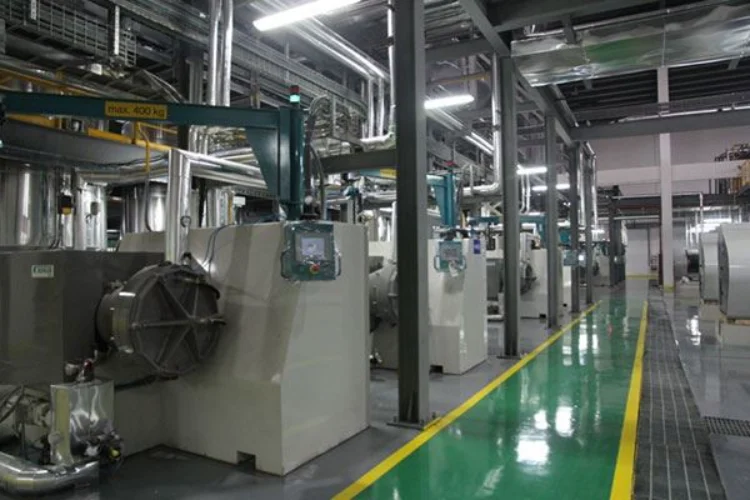

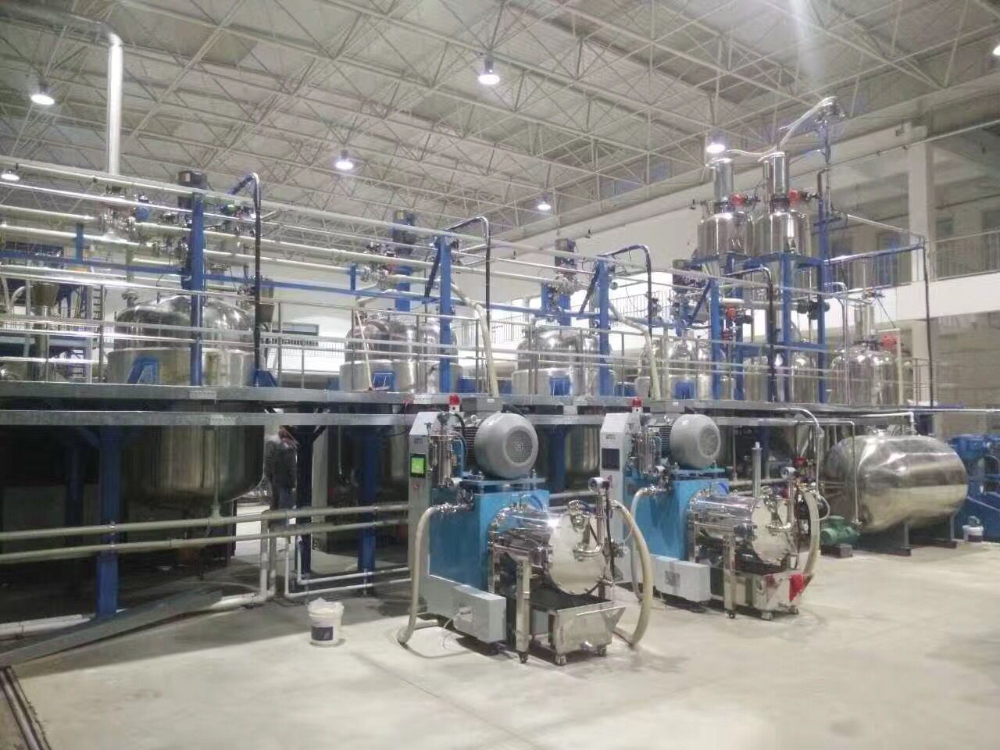

Proof From Real Projects
Our customers span Russia, Australia, Vietnam, Germany, and Romania. In one 2026 project, we designed and quoted an interconnected, CE-conformity line for a Romanian start-up. It includes a vacuum planetary mixer, a three-roll mill, and a gravimetric filling machine, with full documentation and a factory acceptance test before final payment. That level of detail is what we bring to paint projects too. You can also read our overview of custom paint production lines to see how we tailor each build.
How to Start a Conversation
Ready for a process-specific proposal? Send us your paint type, working batch size, daily output, viscosity range, fineness target, container sizes, and installation location. We will help you match the machines to your recipe.
Paint Manufacturing Equipment FAQs
These quick answers cover the questions new paint makers ask most. Each one is short, so you can scan and move on.
What machines are required for paint manufacturing?
A liquid-paint line usually uses weighing and charging tools, a high-speed disperser, mixing vessels, transfer pumps, filters, and filling equipment. Add a bead mill when your recipe needs finer grinding. Both manual and automatic setups are available, so you can match the line to your budget.
Can I start a paint business with only a mixer?
Yes. If you are new to the paint industry, you can start with just one 500 L or 1,000 L mixer and a pull tank (a mobile mixing vessel). Mix the batch in the tank, then fill the finished paint by hand. You do not need a full production line at the start — add filtering, a filling machine, and quality-control equipment later, as your orders grow.
Is a bead mill necessary for making paint?
Not always. First, test your recipe on a disperser. Then, add a bead mill only if the paint cannot reach your fineness, color, gloss, or consistency targets. A trial run gives you proof before you spend the money.
What is the difference between a paint mixer and a high-speed disperser?
A disperser usually uses a saw-tooth disc to pull powder in and break up lumps fast. Mixing is the wider job of combining ingredients. Final blending may need a gentler type of stirring, so many factories use both.
What extra equipment does solvent-based paint need?
Flammable liquids call for extra planning. Review ventilation, ignition control, storage, transfer, and electrical installation. An explosion-protected motor alone is not a complete safety design, so involve a local safety engineer early.
How much does it cost to start a paint manufacturing plant?
No single honest number exists without your location, recipe, capacity, and automation level. Instead, price machines, utilities, safety systems, installation, commissioning, lab tools, and spare parts separately. Then, compare dated quotes that list exclusions clearly.
Should a startup buy manual or automatic machinery?
Either can work. Base your choice on workload, scheduling, and how repeatable your batches must be. Many startups begin with manual or semi-automatic steps and automate later, once a real bottleneck appears.
Final Thoughts
Starting a paint business is easier when you buy in the right order. Instead of chasing the biggest machine, follow the simple path we covered: buy the basics, test the uncertain parts, and add upgrades only when your numbers prove you need them. This approach protects your cash, shortens your launch, and keeps your paint consistent from the very first batch.
Your Quick Recap
- Buy now: scales, a disperser, vessels, pumps, a filter, basic filling tools, and basic QC tools.
- Test first: bead mills, special contact materials, and solvent-safe equipment, based on real trial results.
- Add later: automation, extra vessels, and faster packaging when a real bottleneck appears.
Three Mistakes to Avoid
- Buying by tank size alone. Capacity depends on the full cycle, including cleaning and packing.
- Forgetting safety and utilities. Ventilation, power, cooling, and waste handling are part of the real cost.
- Comparing quotes that are not equal. Always check what each offer includes and excludes.
Take the Next Step With Z-MIXER
In short, the best paint manufacturing equipment is the equipment that fits your recipe, your daily output, and your budget. You do not have to figure it out alone. Our engineers can review your formulation, run a trial in our Test & Development Center, and design a setup that grows with your business. From a single lab disperser to a complete 50,000 L line, we support you with a one-year warranty and whole-life after-service.
Contact Z-MIXER today. Send your paint type, batch size, daily output, viscosity range, fineness target, container sizes, and site location, and we will reply with a clear, process-specific equipment proposal. Visit our product catalog to start, or learn more about our team before you reach out.
Helpful External Resources
- ROSS: Designing High-Speed Dispersers for Large-Scale Mixing Processes
- OSHA 1910.106: Flammable Liquids Standard
- U.S. EPA: Background Document on Paint Manufacturing Waste Streams (historical)
- American Coatings Association: State of the U.S. Paint and Coatings Industry 2026
- American Coatings Association: 2026 Economic Facts Sheet (PDF)
